Analysis of UK economic performance under current and incoming PM
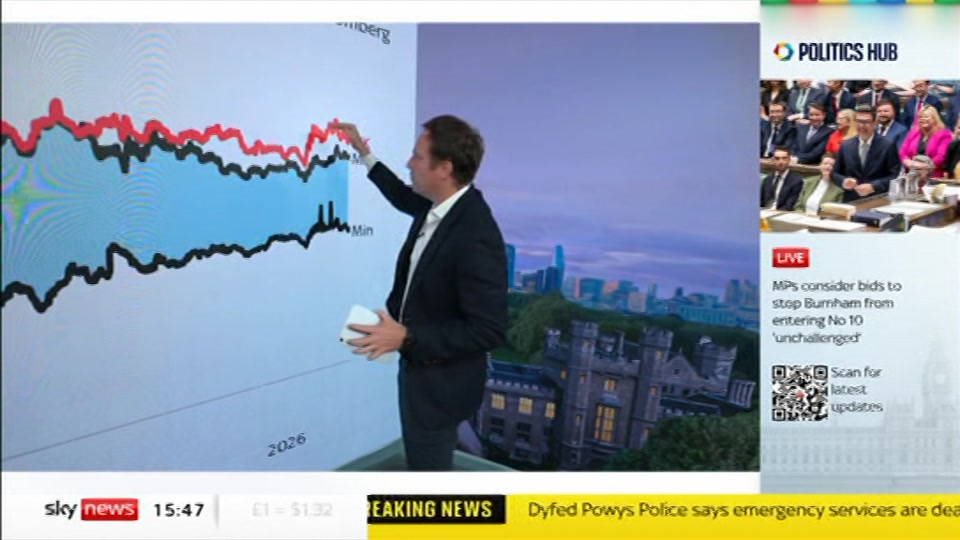
Ed Conway and other analysts examine UK economic performance under Keir Starmer and the challenges facing the new PM, including GDP, NHS waiting lists, and small boat crossings.
Narrative Synthesis
Neutral news article compiled by integrating coverage details from all reporting stations.
UK Braces for Record-Breaking Heatwave as Schools Close Early
A severe heatwave is sweeping across the UK, with temperatures expected to break June records and potentially reach 39°C or even 40°C in some areas. The Met Office has issued a red warning for heat covering central southern Britain, with amber warnings across much of the south. The extreme weather has already forced hundreds of schools to close their doors or send students home early, as classrooms become dangerously hot.
Meteorologists warn that the humidity accompanying this heatwave will be exceptionally high, making it harder for the body to cool down through sweating. The humidity levels are expected to be higher than during the record-breaking 40°C heatwave of July 2022. Climate change is cited as a factor, as a warmer atmosphere holds more moisture, increasing humidity. The heat is forecast to peak midweek, with nighttime temperatures remaining above 20°C in many areas.
School leaders are grappling with the challenge of keeping children safe. There is no legal upper limit for classroom temperatures, so head teachers are making individual decisions based on their buildings and resources. Many schools have relaxed uniform rules, encouraged water bottles, and moved activities to cooler times of day. However, in older buildings without air conditioning, temperatures have exceeded 30°C, making normal learning impossible. Simon Kidwell from the National Association of Head Teachers noted that while schools are reluctant to close due to the impact on working parents, safety is the priority. He suggested that more permanent changes—such as air conditioning, adjusted school days, or longer summer breaks—may need to be considered if such heatwaves become more frequent.
Ukraine Conflict: Russia's Summer Offensive and Ukraine's Defensive Strategy
Separately, the broadcast also covered the ongoing war in Ukraine, with analysts assessing Russia's recent advances near Kramatorsk and Kosti Antonovka. While these gains open a gateway to more territory, the progress is slow and attritional. Russia has lost many forces and is struggling to recruit new soldiers at the same rate as before. The offensive appears partly motivated by a desire to appear on the front foot after media reports suggested Ukraine was gaining the upper hand.
Ukraine's response involves three key strategies: making Russia pay a heavy price for every advance, targeting Russian infrastructure deep behind the front lines to disrupt fuel supplies (especially in Crimea), and putting pressure on Crimea itself—a region many analysts consider the original driver of Russia's invasion. However, experts caution that Ukraine is not close to winning the war in the sense of fully expelling Russian forces. Instead, the conflict resembles a war of attrition where Ukraine's goal is to avoid losing, thereby forcing Russia to grind to a halt.
On screen
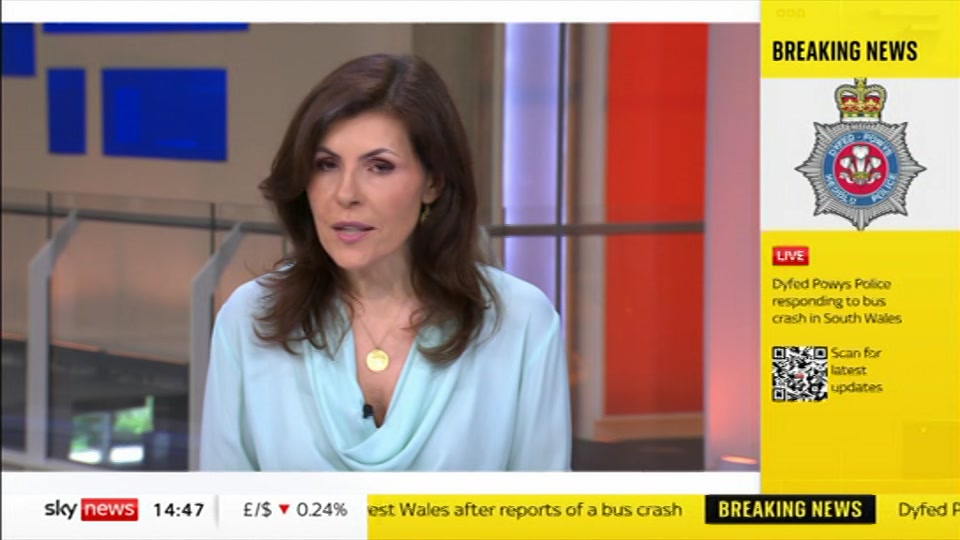
Representative stills from the broadcasts tracked here - not necessarily the moment shown on air.
Key Claims
Factual or political claims reported during this story's coverage, mapped by channel and broadcast day.
| Claim | Sky News |
|---|---|
| UK government bond yields are higher than other G7 countries, indicating higher borrowing costs. | ✓ |
| The NHS waiting list target of 92% treated within 18 weeks was briefly met but has since fallen slightly below the target. | ✓ |
| Small boat crossings in 2025 are rising less quickly than in previous years and are lower than peaks in 2022 and 2024. | ✓ |
| Public sector net investment is higher under the current government than it would have been under previous plans. | ✓ |
Channel Perspectives
Editorial focus, emphasis angles, and key quotes from each reporting news station.
Sky News provided a data-driven, balanced analysis of the UK economy under Keir Starmer, using visual charts to compare performance across GDP, NHS waiting lists, small boat crossings, and public finances. The tone was neutral, highlighting both achievements (e.g., fastest G7 growth in Q1, higher investment) and ongoing challenges (e.g., high bond yields, moderate full-year growth, waiting list target slippage). The segment also explicitly framed the bond market as a constraint for the incoming PM, Andy Burnham.
- “The key thing to note here is the red line the UK is basically much higher than everyone else and this is one that's going to be one of the issues that Andy Burnham faces.”
- “If you look back just since Keir Starmer came into office well again we're kind of high middle of the pack higher than the most of the rest of Europe but lower considerably lower than the US.”
- “The thing that the Prime Minister wanted to focus on when he was outside Downing Street is investment being up and i think this is significant here... that's a really sizable difference when it comes to public sector net investments.”
Bulletin Timeline
Chronological list of news reports tracked for this story.