Keir Starmer resigns as Prime Minister and Labour leader
Keir Starmer has resigned as Prime Minister and Labour leader after losing the confidence of his party, triggering a leadership contest with Andy Burnham as frontrunner.
Narrative Synthesis
Neutral news article compiled by integrating coverage details from all reporting stations.
Keir Starmer Resigns as Prime Minister and Labour Leader
Keir Starmer has resigned as Prime Minister and leader of the Labour Party after losing the confidence of his parliamentary party, triggering a leadership contest in which Greater Manchester Mayor Andy Burnham has emerged as the clear frontrunner. The resignation, announced outside Downing Street alongside his wife Victoria, brings an abrupt end to a premiership that began with a landslide election victory in 2024 but was quickly undermined by a series of political missteps and a devastating set of local election results.
In his resignation speech, Starmer struck a dignified and honourable tone, acknowledging that the situation had become untenable. He pointed to what he considered his government's achievements—falling NHS waiting lists, reduced small boat crossings, and the fastest growth in the G7—but conceded that these successes had not been effectively communicated to voters. The final blow came when a significant number of Labour MPs, fearing electoral wipeout at the next general election, withdrew their support, making it impossible for him to command a majority in the House of Commons.
Andy Burnham, who won a record-breaking by-election in Macclesfield earlier this year, immediately declared his intention to stand for the leadership. He has already secured the backing of several MPs, including Health Secretary Wes Streeting, who said he would not run against him. Burnham is expected to arrive in London later today to begin building his campaign. The contest is set to begin in early July, and if it is uncontested, a new Prime Minister could be in place by the end of the month.
International reaction has been swift. Ukrainian President Volodymyr Zelensky praised Starmer's unwavering support for Ukraine, calling him a 'welcome guest' and thanking him for 'every meeting and every conversation' that strengthened Europe's security. Starmer's backing for Ukraine, which continued the policy of his predecessor Boris Johnson, is widely seen as one of the defining achievements of his short tenure.
Starmer's path to power was remarkable. A former human rights barrister and Director of Public Prosecutions, he entered Parliament at 52 and became Labour leader five years later. He quickly moved the party to the centre, suspended Jeremy Corbyn, and overturned a massive Conservative majority in 2024. But within weeks of taking office, his government announced cuts to winter fuel payments for pensioners—a policy that proved deeply unpopular and was later reversed. Other controversies, including the appointment of Peter Mandelson as US ambassador, further eroded public trust. Local election results in May were catastrophic, and the subsequent parliamentary mutiny sealed his fate.
As the Labour Party now turns to a leadership contest, the question of mandate looms. While Starmer won a national mandate in 2024, Burnham's mandate comes only from his Macclesfield constituency. However, supporters argue that the UK does not have a presidential system, and that any MP who can command a majority in the Commons is entitled to become Prime Minister. Burnham has pledged to remain within the existing fiscal rules and to build on the 2024 manifesto, but his campaign is expected to emphasise a more optimistic, unifying message—the same approach that delivered his stunning by-election victory.
For Starmer, the fall has been swift and painful. A man named after Labour's first parliamentary leader, Keir Hardie, he will be remembered as a leader who won a historic majority but could not hold his party together. His resignation leaves a political vacuum that Andy Burnham now seems poised to fill, with the future of the government—and the country—hanging in the balance.
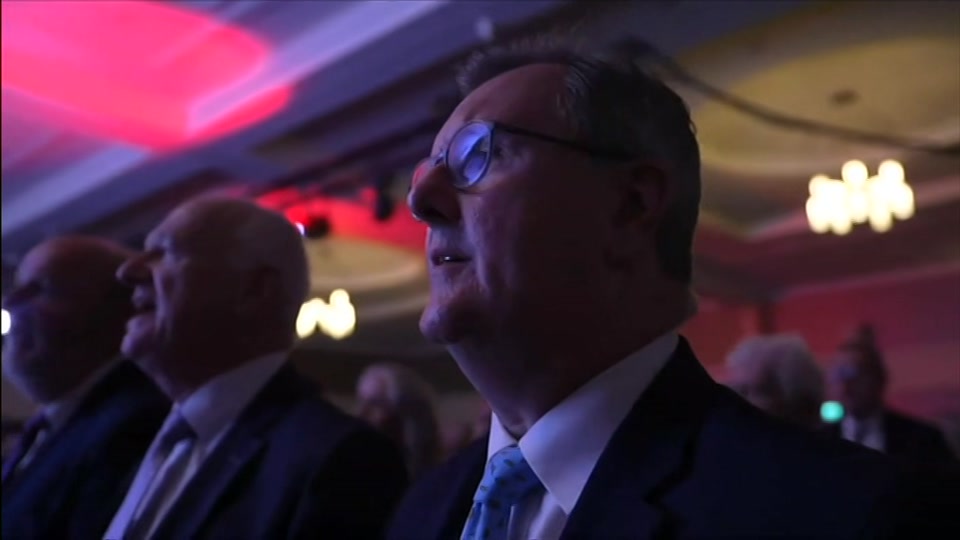
On screen
Representative stills from the broadcasts tracked here - not necessarily the moment shown on air.
Key Claims
Factual or political claims reported during this story's coverage, mapped by channel and broadcast day.
| Claim | BBC One | Sky News |
|---|---|---|
| Keir Starmer resigned as Prime Minister and Labour leader on 22 June 2026. | ✓ | ✓ |
| Starmer's premiership lasted less than two years. | ✓ | · |
| Andy Burnham announced he would stand for Labour leadership, and Wes Streeting said he would not challenge. | · | ✓ |
| Starmer's unpopular policies included cutting winter fuel payments for pensioners and appointing Peter Mandelson as US ambassador. | ✓ | · |
| President Zelensky thanked Starmer for his support for Ukraine. | · | ✓ |
| The local election results were described as devastating and led to a parliamentary mutiny against Starmer. | ✓ | ✓ |
Channel Perspectives
Editorial focus, emphasis angles, and key quotes from each reporting news station.
Sky News focused heavily on the immediate aftermath of Starmer's resignation, including international reaction from President Zelensky and the emerging leadership contest. The channel provided extensive analysis of Starmer's premiership and conducted an interview with Labour MP Rupert Huck, who supported Andy Burnham, emphasizing the sense of inevitability around Burnham's candidacy and the threat from Reform UK.
- “Kyra, thank you for all our cooperation, your support and the joint decisions that have helped make our Europe and our protection of life stronger.”
- “It's a strange day. In some ways it's very sad that two years ago such a lot of optimism was placed in Kyra Starler. We won a stonking record majority. It's not very often that happens with Labour governments in this country. It's very sad it's ended like this.”
- “I think people are looking at Macafield and thinking that if he's someone that can unite the party and also smash you know at one stage they were saying reform restore they might mess it up I mean he could come through the middle he beat all of them put together it was a record-breaking result”
BBC ONE West's coverage concentrated on the reasons behind Starmer's downfall, framing his premiership as a series of misjudgments and wasted opportunities. The report highlighted specific policy errors, such as the winter fuel payment cuts and the Mandelson appointment, and emphasized the plummeting popularity and internal mutiny that led to his resignation. The tone was more analytical and retrospective compared to Sky News's live reaction focus.
- “The man who rose to power partly due to his opponent's struggles with standards has now been brought down after a series of his own misjudgments.”
- “His premiership which started with a stunning electoral success... has been on the slide for months and will ultimately be remembered as one of early errors, wasted opportunities and plummeting popularity.”
- “Appointing Peter Mandelson as US ambassador was perhaps the worst yet it was a disastrous set of election results, the subsequent parliamentary mutiny and a looming leadership battle that eventually helped end Sakhir Stama's time at the top.”
Bulletin Timeline
Chronological list of news reports tracked for this story.