Red extreme heat warning issued for parts of UK
The Met Office has issued a rare red extreme heat warning for parts of England and Wales, with temperatures potentially reaching 40°C.
Narrative Synthesis
Neutral news article compiled by integrating coverage details from all reporting stations.
UK Braces for Record-Breaking Heatwave as Red Warning Issued
The United Kingdom is facing an unprecedented early-summer heatwave, with the Met Office issuing a rare red extreme heat warning for parts of England and Wales. Temperatures are forecast to soar into the high 30s Celsius, potentially reaching 40°C, which would shatter the existing June record of 35.6°C set during the historic heatwave of 1976.
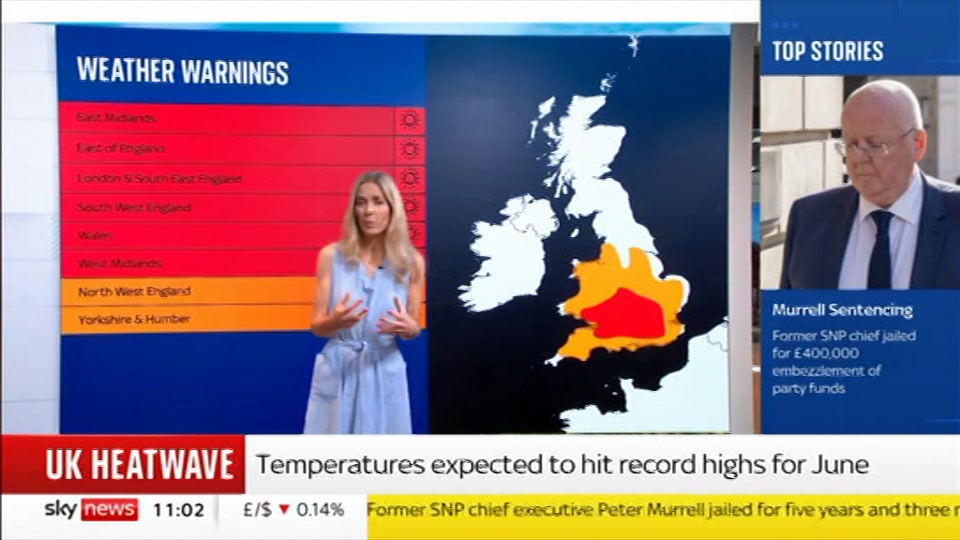
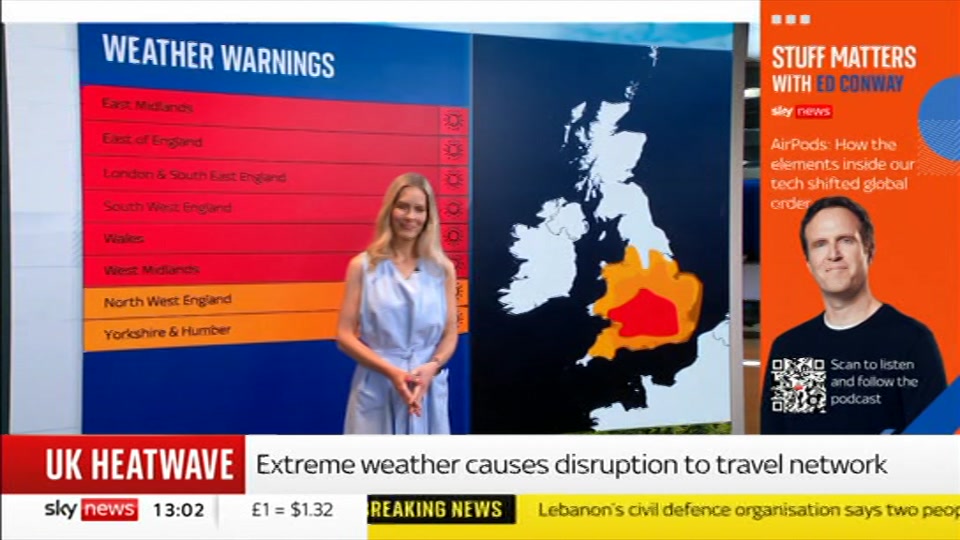
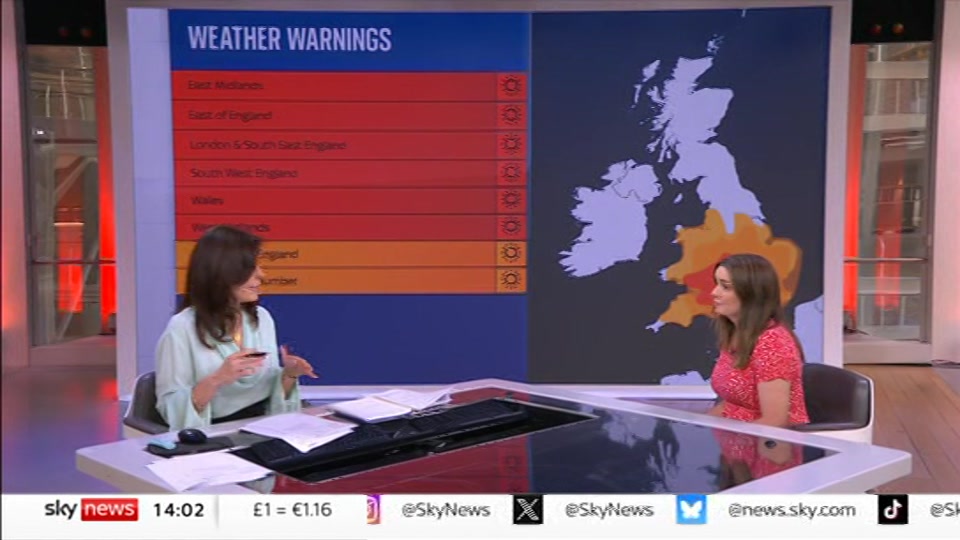
The red warning, only the second of its kind since the extreme heat alert system was introduced in 2021, comes into force from 9 a.m. on Wednesday and remains in place until 9 p.m. on Thursday. It covers an area stretching from London to Swansea and from Somerset to Birmingham. A broader amber warning is already in effect across much of England and Wales, with the heat expected to spread further north later in the week.
Impacts on Health, Schools, and Transport
Health officials have warned that the extreme heat poses a risk to the wider population, not just vulnerable groups such as the elderly, young children, and those with underlying health conditions. The high humidity accompanying this heatwave makes it particularly dangerous, as the body struggles to cool down through sweating when the air is already saturated. Overnight temperatures are expected to remain above 20°C in many areas, creating “tropical nights” that offer little respite.
In response, hundreds of schools across England and Wales have announced closures or early dismissals to protect students. At least 312 schools are fully or partially closed this week, according to reports. Transport operators have also taken action: Britain’s biggest train operator has advised passengers not to travel on Wednesday or Thursday due to the risk of heat-related disruptions, including rail buckling and signal failures.
Thunderstorms and Lightning Strikes
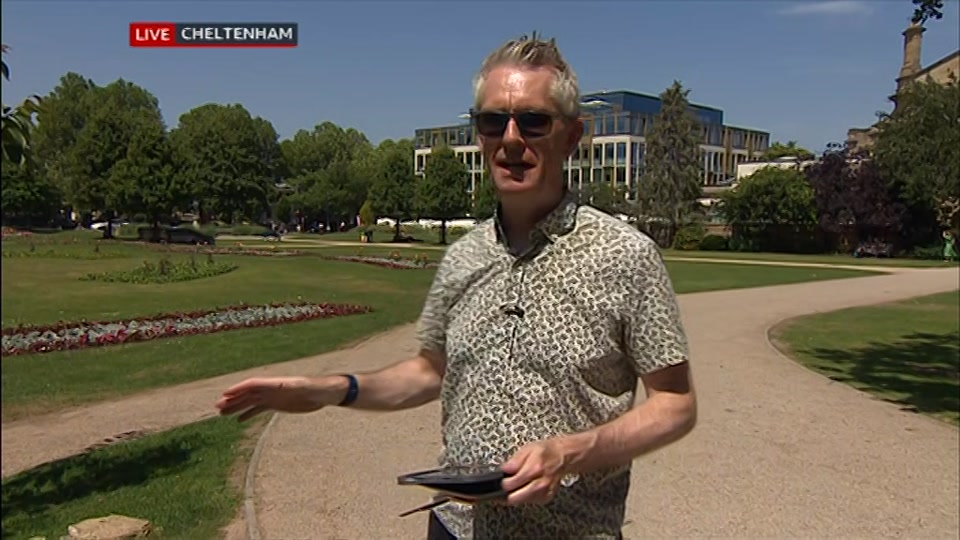
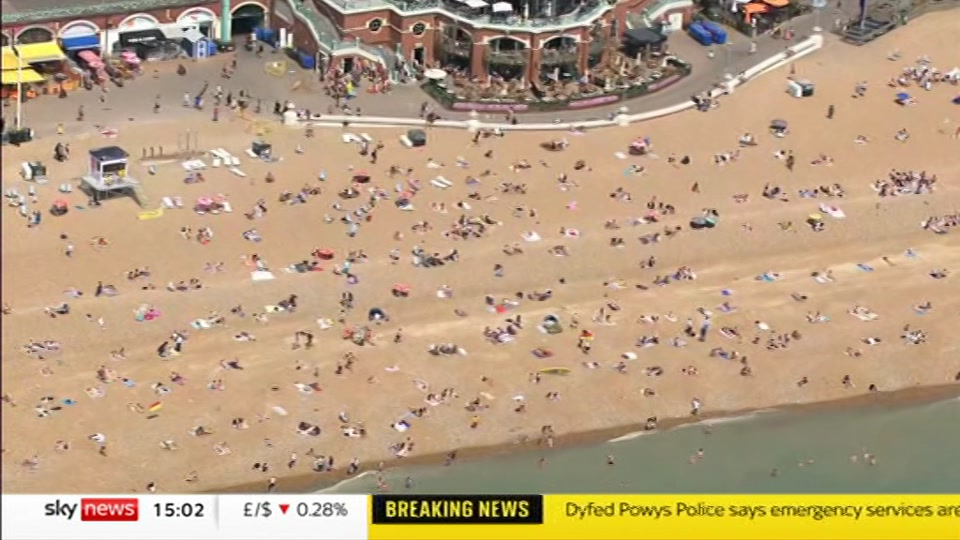
The heatwave was preceded by a dramatic night of thunderstorms, with 26,000 lightning strikes recorded across southern Britain. The London Fire Brigade responded to around 400 calls overnight, including two house fires believed to be caused by lightning strikes and incidents of flash flooding. In Bristol, a house roof caught fire after being struck by lightning, though no injuries were reported. The storms caused flooding on roads and delays on London’s transport network, including services to Heathrow Airport.
Climate Context and Future Projections
This week marks the 50th anniversary of the start of the 1976 heatwave, which remains etched in public memory for its scorching temperatures, dried-up reservoirs, and water shortages. Scientists from the University of Reading and the Met Office have used the anniversary to release new projections showing that climate change is making such events more intense. If a 1976-style heatwave occurred today, it would be 3–4°C hotter, with longer spells of extreme heat. Looking ahead to 2056, models suggest that similar weather patterns could bring several days of 40°C heat, with peaks of 45°C in parts of the Midlands—conditions currently associated with Dubai.
Speaking at London Climate Action Week, the UN Secretary General warned that “London is cooking” and that the world is closer to catastrophe, linking the extreme weather to the broader climate crisis.
Advice for the Public
Health authorities are urging people to stay hydrated, avoid direct sunlight during the hottest part of the day, and check on vulnerable neighbours. Those heading to beaches, parks, or open water are reminded to take extra care, as the risk of drowning increases in hot weather. The Met Office advises keeping curtains closed during the day, using fans or cool showers, and never leaving children or pets in parked cars.
As the UK swelters under this historic heatwave, the message from officials is clear: take the warnings seriously, plan ahead, and look out for one another.
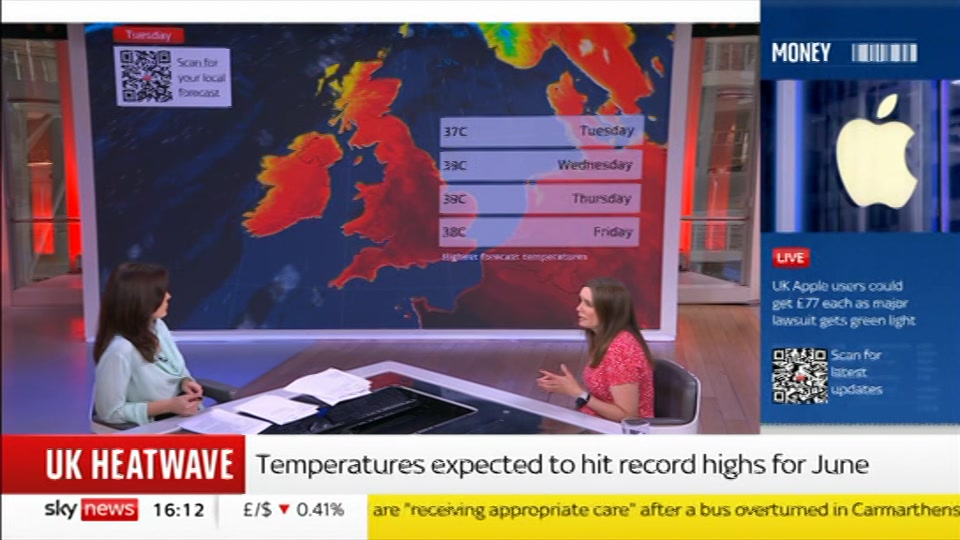
On screen
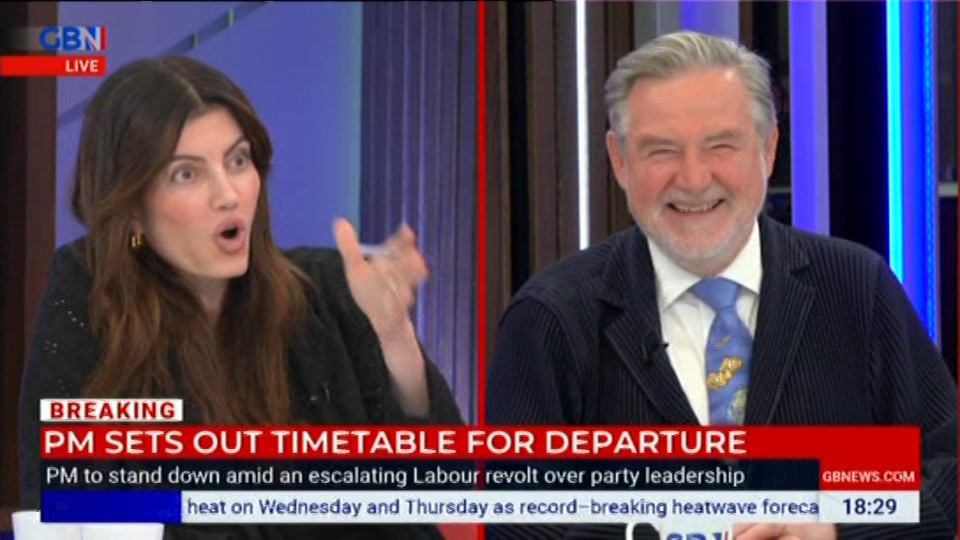
Representative stills from the broadcasts tracked here - not necessarily the moment shown on air.


Key Claims
Factual or political claims reported during this story's coverage, mapped by channel and broadcast day.
Monday 22 June 2026
| Claim | Channel 5 | BBC One | GB News | ITV | Sky News |
|---|---|---|---|---|---|
| Met Office issued a red extreme heat warning for parts of central and southern England and Wales for Wednesday and Thursday. | ✓ | ✓ | ✓ | ✓ | ✓ |
| Temperatures could reach 38–40°C, potentially breaking the June temperature record of 35.6°C. | · | ✓ | ✓ | ✓ | ✓ |
| The red warning is only the second time such a warning has been issued. | ✓ | · | · | · | · |
| Potential danger to life and power outages were mentioned. | ✓ | · | · | · | · |
| Schools have closed due to the heatwave, with some closing early. | · | · | ✓ | · | · |
| Transport bosses have warned against all but essential travel. | · | · | ✓ | ✓ | · |
| The heatwave is linked to climate change, with future projections showing even more extreme heat. | · | ✓ | · | · | · |
| Wildfires have been reported, with fire crews tackling a moorland fire in West Yorkshire. | · | · | ✓ | · | · |
| Overnight thunderstorms caused 26,000 lightning strikes and flooding, disrupting transport. | · | · | · | · | ✓ |
| High humidity will make the heat feel more oppressive and increase health risks. | · | · | · | ✓ | ✓ |
Tuesday 23 June 2026
| Claim | Channel 5 | BBC One | GB News | ITV | Sky News |
|---|---|---|---|---|---|
| The heatwave is linked to climate change, with future projections showing even more extreme heat. | · | ✓ | · | · | · |
| Wildfires have been reported, with fire crews tackling a moorland fire in West Yorkshire. | · | · | ✓ | · | · |
| The Met Office issued a rare red extreme heat warning for the second time ever, covering parts of central and southern England and Wales, from 9am Wednesday to 9pm Thursday. | ✓ | ✓ | ✓ | ✓ | ✓ |
| Temperatures could reach 37-40°C, with a chance of exceeding 40°C, potentially breaking the June record of 35.6°C. | · | ✓ | ✓ | ✓ | ✓ |
| Overnight thunderstorms produced 26,000 lightning strikes, causing flooding and transport disruption, with London Fire Brigade responding to around 400 calls including house fires. | · | · | · | · | ✓ |
| Many schools closed or sent students home early due to the extreme heat. | · | · | ✓ | ✓ | ✓ |
| Officials warned of health risks, including danger to life, and urged precautions such as staying safe around open water. | ✓ | · | ✓ | · | ✓ |
| A red warning for extreme heat was issued for parts of England and Wales on Wednesday and Thursday, the second such warning ever. | ✓ | ✓ | · | · | · |
| Temperatures are expected to reach 39–40°C, potentially breaking the June record of 35.6°C and the all-time UK record of 40.3°C. | · | ✓ | ✓ | ✓ | ✓ |
| Climate change is making heatwaves more intense, with projections of 45°C by 2056. | · | ✓ | · | · | · |
| The heatwave could pose a danger to life and cause power outages. | ✓ | · | · | · | · |
| At least 312 schools across England and Wales are closing fully or partially this week. | · | · | ✓ | · | · |
| Britain's biggest train operator warned passengers not to travel on Wednesday or Thursday due to the heat. | · | · | ✓ | · | · |
| 26,000 lightning strikes were recorded overnight, causing fires and flooding; London Fire Brigade responded to around 400 calls including two house fires. | · | · | · | · | ✓ |
Channel Perspectives
Editorial focus, emphasis angles, and key quotes from each reporting news station.
BBC ONE West provided comprehensive meteorological coverage, focusing on the record-breaking nature of the heatwave and its historical context. The channel highlighted the 1976 heatwave anniversary and used climate projections to underscore the role of climate change. Its tone was informative and scientific, with detailed graphics and expert commentary.
- “Temperatures could reach 38, 39, even 40 degrees Celsius. That's going to destroy that June temperature record.”
- “If this 1976 event happened today, we get 20% lower rainfall, we get 10% more deficit in our water supplies, and we get 3 or 4-degree hotter heat wave.”
ITV1 gave minimal coverage to the heatwave, devoting the vast majority of its broadcast to the political story of Keir Starmer's resignation and the Labour leadership contest. The only mention of the heatwave was a brief teaser at the end of the evening bulletin, with no detailed reporting or analysis.
- “And we already know that we're getting extreme heat this week, but why will it feel even hotter than the 39 degrees that's forecast? I'll let you know later in the programme.”
5 News balanced its political coverage with a dedicated segment on the heatwave, emphasizing the severity of the red warning and potential dangers to life. The channel used a meteorologist to explain the forecast and advised viewers on safety measures. Its tone was serious and public-service oriented.
- “For the second time ever, a red warning has been issued for extreme heat. That could mean a danger to life as well as potential power outages…”
GB News covered the heatwave across multiple programs, but with a notably skeptical and critical tone. While reporting factual details such as school closures and transport warnings, presenters questioned the severity of the heat and criticized government regulations, suggesting that air conditioning should be more widely adopted. The channel also highlighted the political angle by linking the heatwave to broader governance issues.
- “Schools close amid heatwave power alerts... a prolonged spell of hot weather could trigger blackouts as wildfires damage power lines.”
- “I think everybody should just deal with the heatwave by getting air conditioning. It's not the Middle Ages anymore.”
Sky News provided the most extensive and urgent coverage of the heatwave, with multiple live reports, meteorologist interviews, and a science editor segment. The channel emphasized the rarity of the red warning, the health risks from humidity, and the connection to climate change. Its tone was authoritative and alarm-raising, with a strong focus on public safety and infrastructure impacts.
- “The Met Office has issued a rare, red weather warning for extreme heat for parts of central and southern England or Wales. It comes into force tomorrow. However, today is still expected to be the hottest day of the year so far.”
- “The UN Secretary General has warned London is cooking and that the world is closer to catastrophe when speaking at the London Climate Action Week today.”
Bulletin Timeline
Chronological list of news reports tracked for this story.